Wednesday, November 14, 2018

Get Some New SEO Transition Words!

I'm no SEO expert, but I've done my fair share of SEO writing over the past few years. As a writer, I'm more concerned with the readability of a site than some of the other technical aspects.

For some of my clients, I work directly in Wordpress. Specifically with the Yoast plugin. One of Yoast's main gauges of readability is transitions words.

On their website, Yoast offers a sample list to help writers. However, their list is very limited.

Recently, I've been working with a client to fill out and optimize their new site. I've spent many hours sifting through other people's writing, adding transition words as I go to meet Yoast's criteria for readability.

After many pages of this site, I quickly got tired of using the same transition words over and over. A simple search brought me to this post on Bloggerspedia. This is an excellent and extensive list of transition words and phrases. If you do any SEO writing, I highly recommend this list for keeping variety in your writing while also hitting Yoast goals for transition words.

Wednesday, September 19, 2018

Even More Recommended Reads

Since my last Recommended Reads post, I have read some SERIOUSLY GOOD books. Good like 'you can't sleep because you need to know what happens next' good.

Especially notable are the 3 by Ezekiel Boone. I read all three in a row and each one was a real pageturner. My favorites from the past few months are in bold:

Ninth City Burning by J. Patrick Black
This Census-taker by China MiƩville
Prophet of Bones by Ted Kosmatka
Dark Matter by Crouch, Blake
Archetype & Prototype (2 books), both by M. D. Waters
Lake Silence by Anne Bishop
Wool, Shift, and Dust (3 separate books), by Hugh Howey
The Hatching, Skitter, and Zero Day (3 separate books), by Ezekiel Boone
The Veil of Gold by Kim Wilkins
The Rise and Fall of D.O.D.O by Neal Stephenson and Nicole Galland
Midnight Crossroad, Day Shift, Night Shift (3 separate books), by Charlaine Harris

Monday, August 13, 2018

Thursday, August 2, 2018

Are These Really Grammar Rules?

Ever been told not to end a sentence with a preposition? Who told you that? Why did they tell you that?

In her article, GRAMMAR PURITY IS ONE BIG PONZI SCHEME, June Casagrande (author of Grammar Snobs Are Great Big Meanies and Mortal Syntax) explains that despite what the grammar 'experts' say, some things are merely stylistic choices.


Tuesday, May 8, 2018

Getting Stuff Sold Through Real Estate Writing

I've done a fair amount of real estate writing over the past few years for both residential and commercial clients. For almost 2 1/2 years, I was the content manager for a local real estate agency. I wrote loads of real estate stuff for them. I've also written a good bit for freelance clients like BCZ Homes, Green Efficient, and Nest Home Solutions. 

Here's an article I wrote last fall for Mindflash, a training company which lists tips for training real estate agents. 


Wednesday, March 7, 2018

Learning From My Writing

As a professional writer, I don't know everything about every subject my clients want me to cover. So when I write an article for a client, I spend time researching so that I can write intelligently about the topic. For example, I'm not a finance guy, but if I'm writing about money and finance, I do research.

This brings me to one of my favorite things about writing for a living. I am always learning new things. And I'm not just learning, I'm learning things that I probably never would have even dreamed of learning if I wasn't being asked to write on the subject. 
My newest client, Brad at Progressive Health, has tasked me write articles on health issues, specifically regarding health, medications and dietary supplements. And already, I've learned a lot. Below is the first article I wrote on ADHD and Acupuncture. 
As I learned from my research, acupuncture is as effective as powerful meds like Ritalin for treating ADHD. And without side effects to boot! Give it a read!

Friday, February 23, 2018

Latest Recommended Reads

Here are the books I've read since my last Recommended Reading post. While all these books were good, the ones in bold were the most enjoyable reads.

Terms of Enlistment by Marko Kloos
The Epiphany Machine by David Burr Gerrard
Gwendy's Button Box by Stephen King and Richard Chizmar
Time Travel by James Gleick
The Minotaur Takes A Cigarette Break by Steven Sherrill
The Minotaur Takes His Own Sweet Time by Steven Sherrill
Wolf in White Van by John Darnielle
Universal Harvester by by John Darnielle
House. Tree. Person by Catriona McPherson
Down Among the Sticks and Bones Seanan McGuire
The Clockwork Dynasty by Daniel H. Wilson
Celine by Peter Heller

Also, I didn't list the books that I started, but didn't finish because I didn't enjoy them. Happy reading!

Sunday, February 18, 2018

Check out my new featured articles on TWM!

My family and I took a Disney Cruise last month. I was privileged enough to be able to write about it and be featured again on TravelingWithMonkeys.com. Check out the first part of this 3-part article here.


And while you're there, check out another of my featured articles, How I Became the Daddy-Daughter Road Trip Master!


Tuesday, February 13, 2018

My path to becoming a better writer

Reading this article by Duncan Riach entitled How to Become World-Class at Anything made me think about my journey to becoming a paid, professional writer.

My path to writing for a living took twists and turns. In the article he talks about regular practice without focusing on the result (in my case I don't focus on the result until it's time to share the work with my clients).

Years of this type of practice freed me up to write better.

I've been writing professionally for 5 years. At the beginning, I was a solid writer who could do research, assimilate ideas and construct sentences without errors. I created coherent articles. Yay for me!

Yet if I compare my writing from 5 years ago to my writing now, there's a significant difference. I've refined my process, found a style and discovered a voice all while improving my mechanics.

One of the best resources, which I've featured here a few times, is Elements if Style. The book contains immensely helpful advice like Omit Unneccesary Words and Focus on the Unit.

More than any advice, method or how-to, my improvement as a writer largely came the old-fashioned way - through practice, repetition and hard work. I've spent many many hours stringing together words. I've spent many more hours reading books with a critical eye towards things like sentence structure, phrasing, word choice, punctuation and many more things.

I love writing, but love isn't enough. Like any relationship, I want my partner, in this case my writing, to be as great as it can possibly be. That's why I continue to practice and consider my writing skills a work in progress.

Tuesday, December 19, 2017

Elite City, Dubai

I've done a fair bit of real estate writing over the past couple of years. One of my most recent clients is one of the more interesting ones that I've ever had. Elite City in Dubai develops luxury towers and sells apartments. I've ghostwritten a few posts for them in the past month. Here they are!

 Elite City ghostwritten blogs

Friday, December 15, 2017

Recent Recommended Reads

I've mentioned before that I love to read. Recently, I've read some really excellent books. The stories range from sci-fi to mystery to weird to coming-of-age.

The Fold by Peter Clines
Bird Box by Josh Malerman
The River of Kings by Taylor Brown
The Stars Are Legion by Kameron Hurley
The Impossible Fortress by Jason Rekulak
Borne by Jeff VanderMeer

If you're looking for a good read, I recommend any of these. Happy reading!

Monday, December 11, 2017

Wednesday, November 29, 2017

Jonas C's new bio

Jonas C., a Malaysian born, Australian-based photographer recently hired me to rewrite his bio. Check it out!

 Jonas C. update bio

Friday, October 13, 2017

What are My Favorite Books?

I write for a living, but I read for pleasure. For me, books are more than a way to pass the time. They let me make the most of my time. Books are more than an escape from the real world. They help me make sense of the real world.

I always have at least one book to read. If not, I feel lost, like I don't know what to do with myself.

Right now I'm reading several books: The Runner by Patrick Lee, Earth by David Brin and Cloud Atlas by David Mitchell (re-reading). I also just finished The False House, the second book in James Stoddard's trilogy and plan to start the third book, Evenmere, soon. Plus I read the Bible almost everyday.

As a lifelong reader, I have no idea how many books I've read in my entire life. While most of them are forgotten, there are some that stick with me. They revisit me from time to time. They haunt me, in good ways. They are the standards by which I judge all other books and stories. These are the ones I call favorites.

Some are books from my childhood. Over the years I've realized that not all of them are great. For example, I read A Wrinkle In Time when I was 9 or 10. After re-reading it a couple of years ago, I really didn't enjoy it as much. It was good, but not as good as I remember. However, as a child, it captivated me entirely, which is the whole point of a good story.

At any rate, below are some of my favorite books of all time (in no particular order). Know that I will add to this list as other books comes to mind, so whatever list you're reading is the latest.
  • The Dark Tower (entire series) - Stephen King
  • The Stand - Stephen King
  • It - Stephen King
  • Interview With a Vampire - Anne Rice
  • The Vampire Lestat - Anne Rice
  • Tale of the Boy Thief - Anne Rice
  • Perdido Street Station - China Mieville
  • The Scar - China Mieville
  • The Sparrow - Marie Doria Russell
  • Never Let Me Go - Kazuo Ishiguro
  • 2001 - Arthur C. Clarke
  • Rendezvous with Rama - Arthur C. Clarke (quite possibly the most perfect sci-fi book ever written)
  • Justice and Her Brothers (series) - Virginia Hamilton
  • Lord of the Rings trilogy - J.R.R. Tolkien
  • The Hobbit - J.R.R. Tolkien
  • A Wrinkle in Time - Madeline L'Engle
  • The Rook - Daniel O'Malley
  • Stiletto - Daniel O'Malley
  • Night Watch (entire series) - Sergei Lukyanenko
  • The Green Future of Tycho - William Sleator
  • Interstellar Pig - William Sleator
  • House of Stairs - William Sleator
  • Foundation (series) - Isaac Asimov
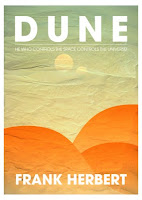
  • Dune - Frank Herbert
  • The Moon is a Harsh Mistress - Robert Heinlein
  • Blackout/ All Clear - Connie Willis
  • Cloud Atlas - David Mitchell
  • The Firm - John Grisham
  • Harry Potter (series) - J.K. Rowling
  • The Time Traveler's Wife - Audrey Niffenger
  • The Hunger Games - Suzanne Collins
  • Flood - Stephen Baxter
  • Ark - Stephen Baxter
  • Wizard's First Rule - Terry Goodkind
Those are some of my faves. What are some of yours?

Wednesday, July 26, 2017

One Step to Becoming a Better Writer

Want to become a better writer? Joe Bunting offers one piece of really fantastic advice. Read his post here - http://thewritepractice.com/become-a-better-writer/

http://thewritepractice.com/become-a-better-writer/

Thursday, July 13, 2017

A Truly Fantastic Guide to Screenplay Writing (and story structure)

I came across this really helpful slideshow which distills storytelling down to its basic elements. While it focuses mainly on writing a screenplay, the info is applicable to any type of storytelling. Great resource!

Screenplay Writing Great Crash Course

Friday, March 24, 2017

Stay Active! (echewing the passive voice)


We’ve previously looked at advice from William Strunk Jr.’s Elements of Style. In this post, we review Section 10 in which he advises writers to Use the active voice.

More Direct, More Vigorous

Strunk’s first reason to write actively is that, “The active voice is usually more direct and vigorous than the passive.” Compare the following:

    I shall always remember my first visit to Boston.

   My first visit to Boston will always be remembered by me.


The first sentence is much better and more direct while the second which is less direct, less bold, and less concise. Removing "by me" makes the second sentence more concise -

    My first visit to Boston will always be remembered,

- but the action is less defined. Is the writer, some person undisclosed or the world remembering this visit? It isn’t clear.

Lively and Emphatic Writing
According to Strunk, “The habitual use of the active voice makes for forcible writing. This is true not only in narrative principally concerned with action, but in writing of any kind. Many a tame sentence of description or exposition can be made lively and emphatic by substituting a verb in the active voice for some such perfunctory expression as ‘there is’, or ‘could be heard’.”

    There were a great number of dead leaves lying on the ground.

    Dead leaves covered the ground.

    The sound of a guitar somewhere in the house could be heard.

    Somewhere in the house a guitar hummed sleepily.


Taking Away a Verb’s Function
In the following examples, the noun expresses the entire action. The verb then has no other job except to complete the sentence.

    A survey of this region was made in 1900.

    This region was surveyed in 1900.


A Passive Dependent on Another Passive
Strunk warns against making one passive verb dependent on another passive verb:

    Gold was not allowed to be exported.

    It was forbidden to export gold (The export of gold was prohibited).


Before the correction, the word that is related to the second passive verb is the subject of the first.

Don’t Abandon it Completely
However, Strunk does not advise writers to eliminate the passive voice completely. Using it is convenient and sometimes necessary, as these examples show:

    The dramatists of the Restoration are little esteemed to-day.

    Modern readers have little esteem for the dramatists of the Restoration.


The first sentence focuses on the dramatists of the Restoration while the second focuses on the tastes of modern readers. In these examples the subject of the sentence determines which voice is used.

Keep it Active
Taking Strunk’s advice, we should always try to use the active voice over the passive voice whenever possible.

Wednesday, February 15, 2017

Focus on the Unit (one paragraph per topic)

We’ve already reviewed a couple of pieces of advice from William Strunk Jr.’s Elements of Style, Section 13: Omit needless words and Section 12: Use definite, specific, concrete language.

This month we explore Section 8 of Elements, where Strunk Jr. advises writers to Make the paragraph the unit of composition: one paragraph to each topic.

When exploring a subject, it is helpful to subdivide it into topics. Each of these topics should be a unique paragraph. Sometimes, these subdivisions can be divided further. The root of the idea is that each paragraph should contain one topic or idea. When that topic or subtopic has been explored, a new paragraph begins.

As Strunk says, “Ordinarily...a subject requires subdivision into topics, each of which should be made the subject of a paragraph...to aid the reader. The beginning of each paragraph is a signal to him [or her] that a new step in the development of the subject has been reached.”

Strunk gives two additional rules:
  • Single Sentences - As a rule, single sentences should not be paragraphs. Exceptions can be made for transition sentences or in writing such as, “textbooks, guidebooks, and other works in which many topics are treated briefly.”
  • Dialogue - When writing dialogue, each ‘spoken’ part should form its own paragraph and new paragraphs begin with each new speaker, even if there is only one word.
As you write, keep this idea in mind and try to limit each paragraph to a topic or some subdivision of topic. Happy writing!

Friday, February 10, 2017

Thoughts on Becoming a Freelancer

By Power_of_Words_by_Antonio_Litterio.jpg: Antonio Litterio derivative work: InverseHypercube (Power_of_Words_by_Antonio_Litterio.jpg) [CC BY-SA 3.0 (http://creativecommons.org/licenses/by-sa/3.0)], via Wikimedia Commons
'Power of Words' photo by Antonio Litterio; Wikimedia
I've been writing and getting paid for it for over 5 years. At first it was part time. But after doing it for a few years, I landed a full time gig with a local real estate agency where I manage content and social media.

Recently, I cut back from my day job because I've got lots of freelance work to do again, bringing me full circle. My hope is to eventually work myself out of my day job.

When I was still ramping up a couple of years ago, I wrote the following post on HubPages entitled My journey to freelancing. In it, I offer advice for someone who's thinking about trying their hand at freelancing or who may have started, but is feeling discouraged.

"I started writing for money about two and a half years ago. At the time I was a stay-at-home dad with one child in kindergarten and another in preschool. But I also had time on my hands. I have known since I was young that I am a decent writer, so I wondered if I could get paid to do it." READ MORE.